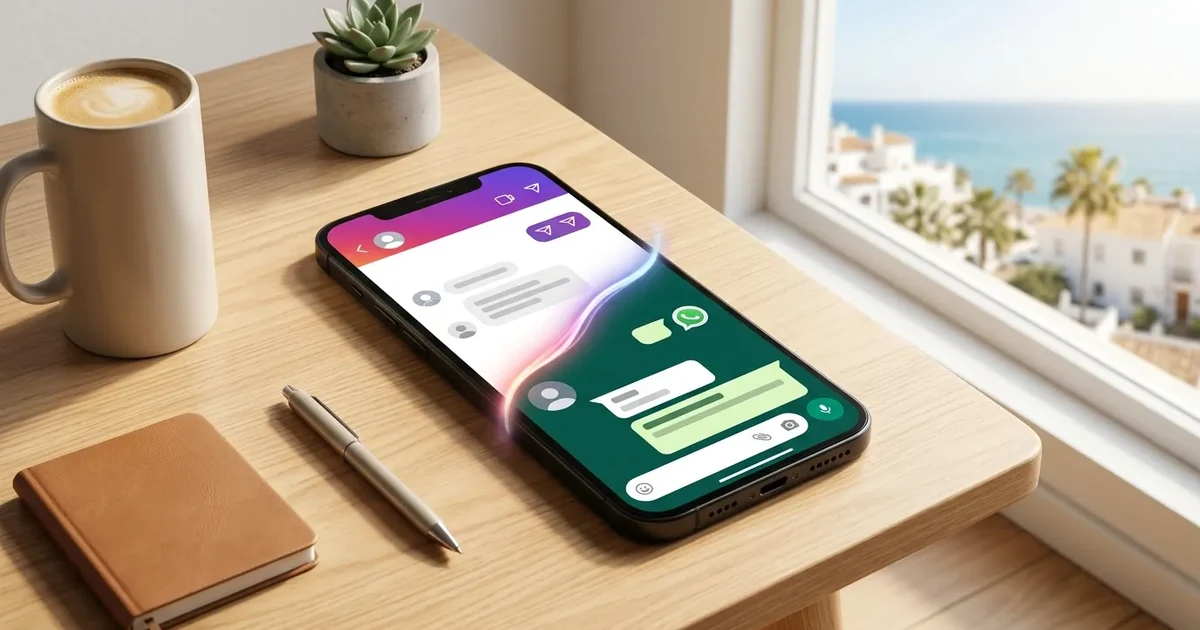
It's tempting to think that being on every possible channel — WhatsApp, Instagram, Facebook, maybe Telegram — is what makes a business grow. In practice, one well-run channel sells more than three half-abandoned ones. The right question isn't "how many channels should I be on?" but "where is my customer actually, and can I serve them well there?"
The most common mistake: adding channels without the capacity to run them
When a business opens a new channel just because "we should be there," the same thing almost always happens: the new channel gets messages nobody checks regularly, the customer experience on that channel is worse than on the others, and the business ends up with more surface area but lower quality at every touchpoint.
Automating with AI changes this equation — but only if the channel makes sense for your business in the first place. Automating a channel your customer doesn't use doesn't generate more sales, just more complexity.
How to decide which channels you need
1. Look at where your messages come from today
If you already get inquiries, check where they come from: WhatsApp number, Instagram comments, Facebook messages. That real data is worth more than any intuition about "where you should be."
2. Think about your customer's journey, not the channel in isolation
Many businesses get their first contact on social media (someone sees a product, a service, a piece of content) and close the sale or booking on WhatsApp. If that's your case, you need both working together, not one or the other — see how it works in practice in our guide to centralizing Instagram and WhatsApp with AI.
3. Start with your highest-volume channel
If you have to pick just one channel to automate first, pick the one that gets the most messages. It's the one that frees up the most time and where you'll see results soonest.
4. Add channels once the first one is under control
There's no point turning on Instagram and Facebook if WhatsApp is still generating unanswered questions or slow replies. Get one channel solid before adding the next.
A quick guide by business type
- Local business with customers calling or messaging to book/order → WhatsApp alone is usually enough to start.
- Business with an active social presence (content, reels, Instagram ads) → you need WhatsApp + Instagram working together from day one.
- Agency or business managing multiple brands or clients → it's worth looking at a plan built for multi-brand from the start, like Social Agency within Social Hub.
How to get started
- Sign up at InBoxIA and automate your highest-volume channel first (usually WhatsApp).
- Check your metrics after 2-3 weeks: how many inquiries the agent handles, how many need a human.
- Add Social Hub whenever you want to centralize Instagram and Facebook too, without losing what's already set up.
FAQ
Is it better to have many channels or focus on one?
A few well-run channels beat many half-run ones. If you can only guarantee good service on one, start there and add channels only once the first one is under control.
Is WhatsApp essential for every business?
In Spain and Latin America, yes in most cases: it's the messaging channel with the highest penetration and the one customers expect to use for questions and purchases.
When does it make sense to add Instagram or Facebook?
When a meaningful share of your customers already discover you or message you through those channels. If you barely get any Instagram messages, automating it isn't a priority yet.
Can I start with one channel and add more later?
Yes, that's the recommended approach. InBoxIA lets you start with just WhatsApp and add Social Hub (Instagram/Facebook) later without losing history or existing setup.
Fewer, better-run channels wins almost every time
There's no magic number of channels that fits every business. What stays constant is that the quality of service on each channel matters more than the number of channels you have open. Start where your customer already is, do it well, and grow from there.